Brachycephalic dogs, including French Bulldogs, English Bulldogs, Pugs, Boston Terriers, and Shih Tzus, are among the most beloved breeds in the country. But their flat faces, the very feature that makes them so distinctive, also make them more vulnerable to breathing problems in dogs that other breeds simply do not face. For pet parents of these breeds, using a dog health tracker to monitor breathing patterns at home is one of the most practical ways to stay on top of their health between vet visits.
Why Brachycephalic Dogs Are Prone to Breathing Problems
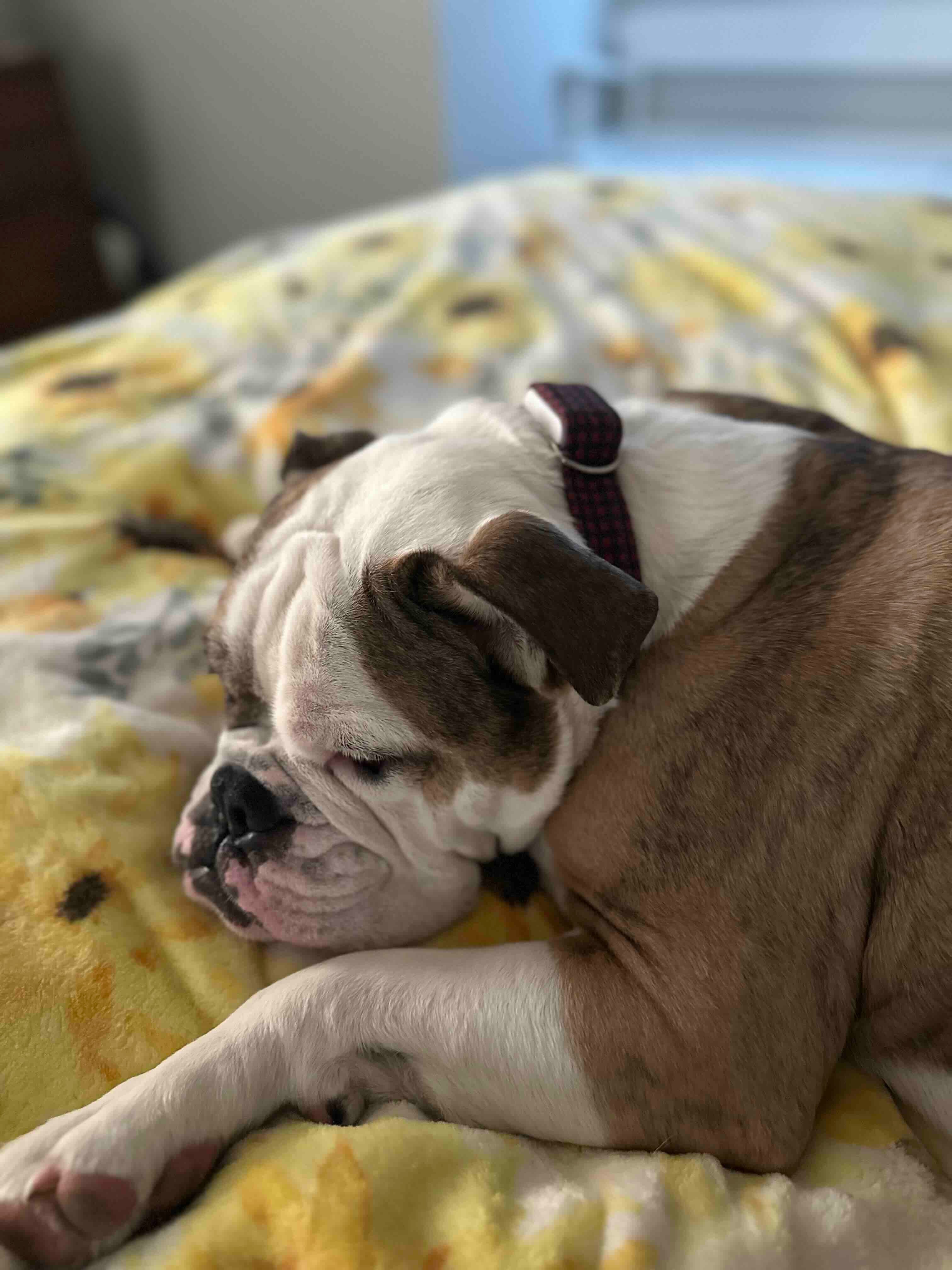
The shortened skull structure of brachycephalic breeds means their airways are naturally more compressed. Soft tissue that would normally sit within a longer nasal passage gets crowded into a smaller space, making every breath slightly harder work. For most dogs, most of the time, this is manageable. But it also means that changes in breathing patterns can signal something worth investigating much sooner than in other breeds.
Dog breathing problems in flat-faced breeds can range from the everyday snoring and snuffling that pet parents become accustomed to, all the way to more significant signs that something has shifted. The challenge is knowing the difference.
“Brachycephalic breeds are already working harder to breathe at baseline, which means even subtle changes in their resting respiratory rate can be clinically significant. Pet parents who track this consistently at home give us much more useful information to work with." - Carolina Domingues, DVM
What Signs of Breathing Problems to Watch For
Dogs with breathing problems do not always show obvious distress. In brachycephalic breeds, especially, changes can be gradual. Signs worth monitoring include:
- Faster breathing while resting or sleeping
- Increased effort when breathing, such as visible belly movement or elbows pointing outward
- Less tolerance for exercise or heat than usual
- Restlessness at night or difficulty settling
- A cough that appears after excitement or when lying down
Resting respiratory rate (RRR) is the number of breaths per minute your dog takes while fully asleep or deeply relaxed. In healthy dogs, this is generally under 30 breaths per minute. A consistent rise above that range is one of the earliest indicators that something may be changing, often appearing before any visible symptoms.
Vets often recommend that pet parents of brachycephalic breeds count their dog's resting respiratory rate manually at home. The challenge is that manual counting requires catching the dog at exactly the right moment, staying still enough not to disturb them, and doing it consistently enough over time to identify a trend. A single reading tells you very little. A pattern tells you a lot, particularly in these breeds, where what owners perceive as normal breathing may already warrant clinical attention.
How Maven Pet Supports At-Home Monitoring
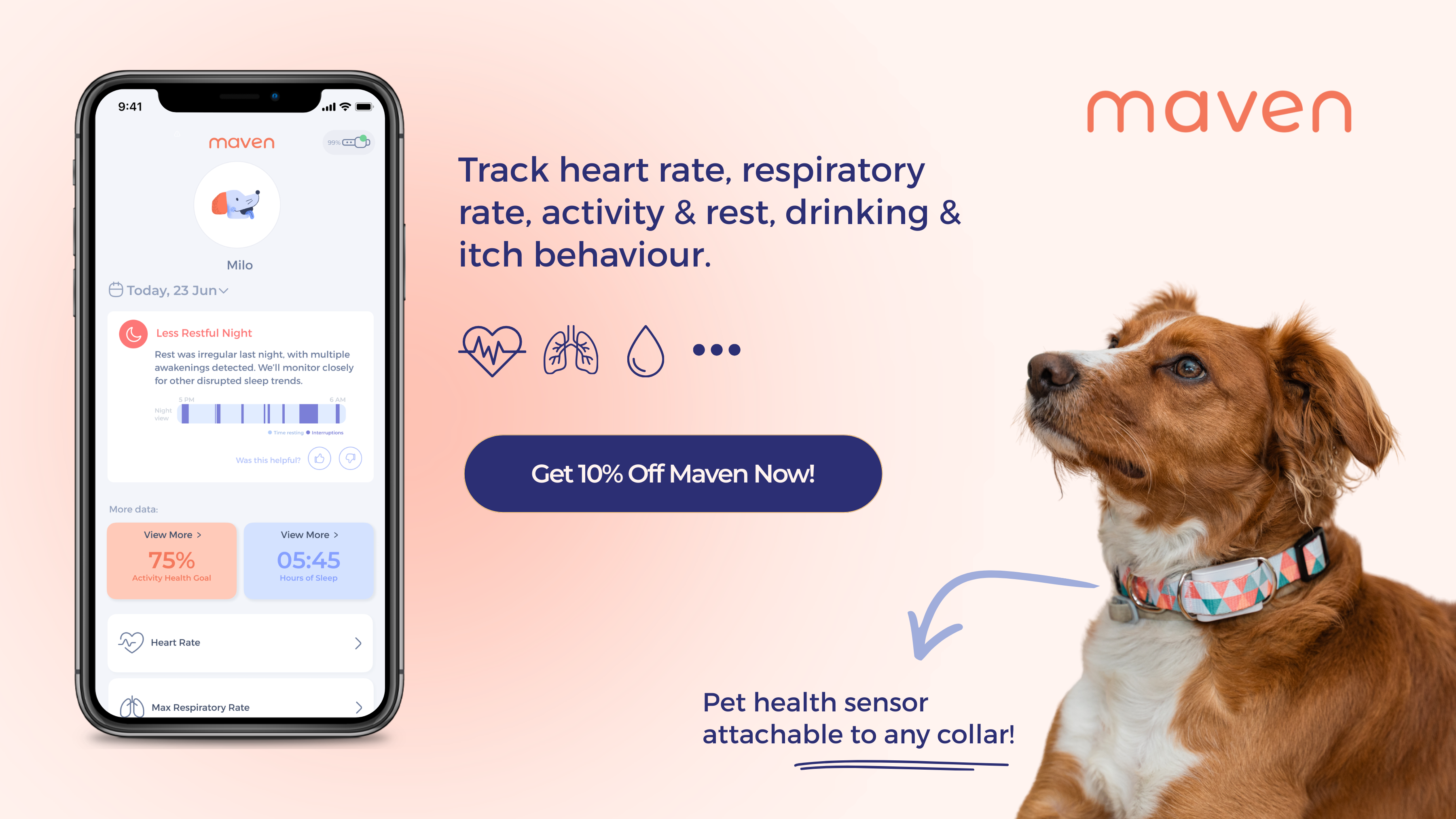
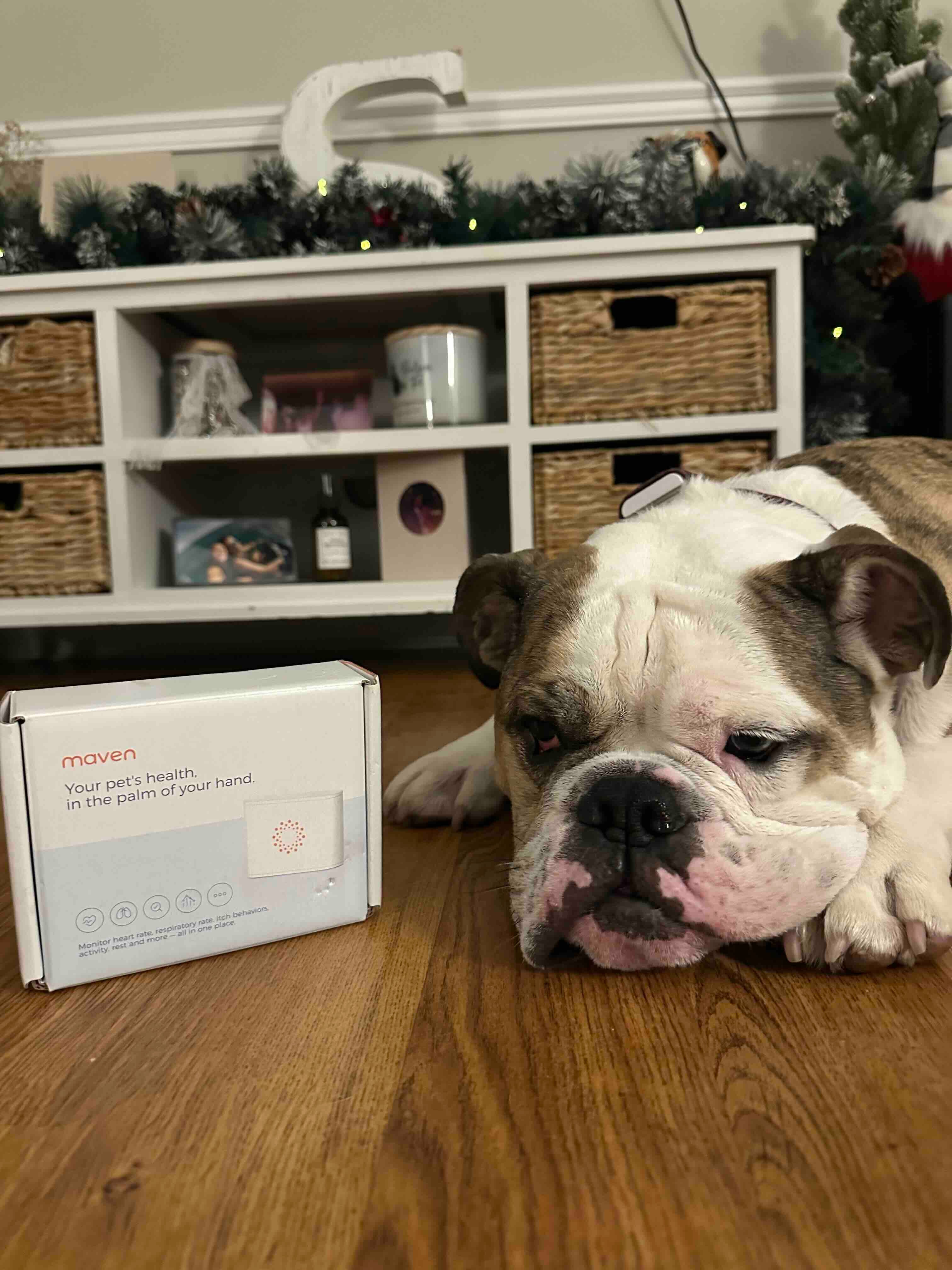
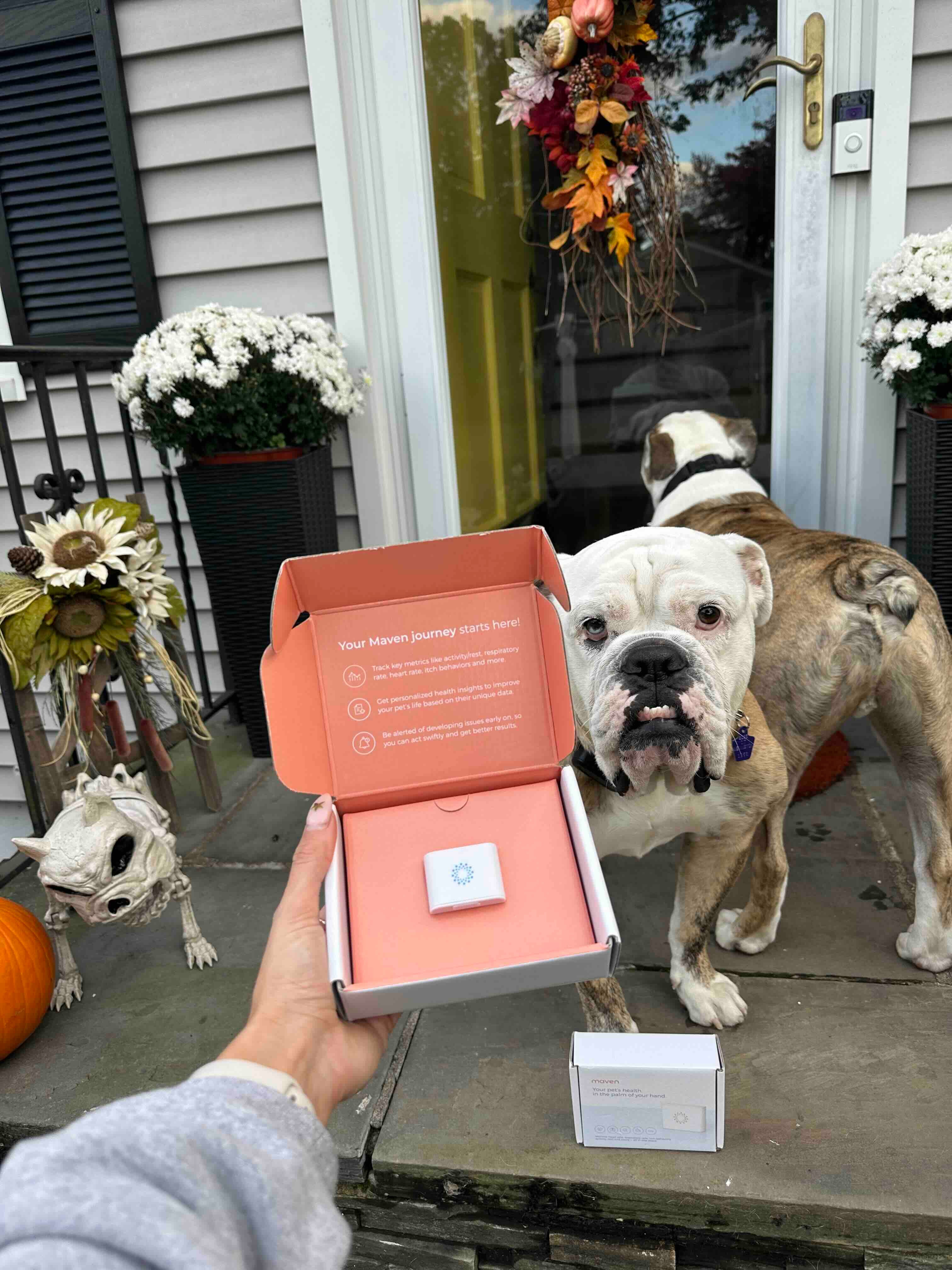
For dogs with breathing problems or breeds prone to them, Maven Pet is a clinically validated dog health tracker that monitors resting respiratory rate continuously, without the pet parent needing to do anything beyond fitting the sensor to the dog's existing collar. At half an ounce, it is light enough that brachycephalic breeds, which can be sensitive to anything adding bulk around the neck, rarely notice it is there.
Maven's dog respiratory rate tracker captures resting readings multiple times throughout the day and night, builds a personalised baseline for each dog, and alerts pet parents when readings trend outside that normal range. This is not a comparison against an average dog. It is a comparison against what is normal for your dog specifically.
Beyond respiratory rate, Maven also tracks:
- Heart rate trends. For brachycephalic breeds where breathing difficulties can create longer-term strain on the heart, continuous heart rate data alongside RRR gives a more complete picture of cardiovascular health.
- Activity and sleep patterns. Dogs with dog breathing problems often show subtle shifts in how much they move and how well they rest before other symptoms appear.
- Itch and scratching behaviour. Flat-faced breeds have higher rates of skin allergies. Maven tracks head shaking and scratching patterns that can indicate a flare-up before it becomes a bigger problem.
Maven's resting respiratory rate monitoring is backed by published veterinary research, including peer-reviewed studies validating its accuracy for at-home continuous use.
How This Data Helps Your Veterinarian
There is a meaningful difference between telling your vet that your dog has seemed a bit off lately and showing them two weeks of resting respiratory rate data with specific readings and trend lines. One is a feeling. The other is information they can act on.
For brachycephalic breeds already managing respiratory conditions or dog heart disease, continuous at-home data between appointments helps vets make faster, more confident adjustments to treatment. For dogs without a current diagnosis, it establishes the baseline that makes future changes detectable early, when intervention is most effective.
Maven generates vet-ready reports directly from the app. Pet parents can show their vet day, week, or month views with trend data that puts the appointment conversation on much more solid ground.
When to Contact Your Vet
Continuous monitoring supports proactive care. It does not replace the judgment call that something needs urgent attention. Contact your vet promptly if your dog shows any of the following:
- Resting respiratory rate consistently above 30 breaths per minute across multiple readings
- Visible breathing effort at rest, with stomach muscles working or elbows pointing outward
- Gums that appear pale, blue-tinged, or white
- Collapse or sudden weakness
- Any breathing difficulty that appears suddenly or is getting worse
If your brachycephalic dog has an existing cardiac or respiratory diagnosis, always follow the specific thresholds your veterinarian has provided.
Don't have a vet in your area yet? We can help you find a local veterinarian.
Maven Pet is a pet health monitoring tool. It does not diagnose or treat medical conditions. Always consult your veterinarian if you have concerns about your dog's health.